
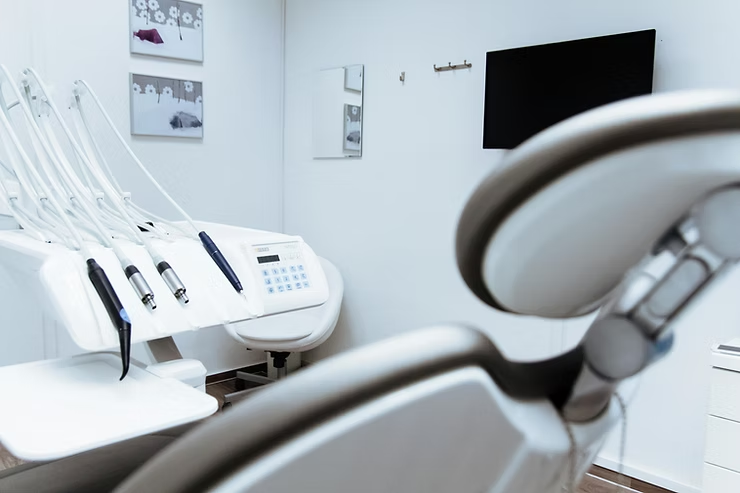
If the last time you visited a dentist you had a mouth full of impression putty, waited weeks for a crown to come back from an outside lab, or felt uneasy about the amount of guesswork involved in your treatment plan, a lot has changed. Modern dental technology has transformed what happens during a dental visit in ways that are genuinely meaningful for patients — less discomfort, shorter appointments, more accurate diagnoses, and better fitting restorations.
At Winyah Dental Group, we have made significant investments in the technology that we believe makes the most practical difference for our patients in Georgetown and Pawleys Island. This post explains what that technology is, how it works in plain terms, and why it matters for the care you receive.
Why dental technology matters for patients, not just providers
It is easy to assume that clinical technology upgrades primarily benefit the practice. The reality is that almost every meaningful advance in dental technology translates directly into a better patient experience. Digital tools reduce the number of appointments required for complex treatments. More precise imaging means less guesswork, fewer surprises during procedures, and restorations that fit correctly the first time. In-office fabrication means you leave with your restoration in one visit rather than two.
The technology at Winyah Dental Group is not technology for its own sake. Each piece of equipment we use was chosen because it improves clinical accuracy, shortens treatment time, or makes the experience more comfortable for patients who may already feel anxious about dental visits. Here is a look at each one.
The intraoral scanner: digital impressions with no trays and no putty
If you have ever had a dental impression taken with traditional putty trays, you already know why the intraoral scanner is one of the most welcome advances in patient-facing dental technology. Traditional impressions require holding a tray filled with thick impression material in your mouth for several minutes while it sets. For patients with a sensitive gag reflex, it is one of the most uncomfortable parts of any dental visit.
The intraoral scanner (IOS) replaces that process entirely. A small handheld wand is moved slowly around the inside of the mouth, capturing thousands of images per second and assembling them into a precise, three-dimensional digital model of your teeth in real time. The whole process takes a few minutes, involves no physical discomfort, and produces no radiation exposure.
What does the intraoral scanner get used for?
Any treatment that previously required a physical impression now uses the intraoral scanner instead. That includes crowns, bridges, veneers, clear aligners, night guards, and dental implant restorations. The digital scan is more accurate than a physical impression because it cannot warp, tear, or shift in transit to a lab. It also means the final restoration is more likely to fit correctly on the first try, reducing the chance of a second appointment for adjustments.
For patients receiving clear aligners, the intraoral scan feeds directly into the ClearCorrect treatment planning software, which can generate a projected outcome so you can see what your finished smile will look like before the first tray is made.
Cone beam CT imaging: the full picture in three dimensions
Standard dental X-rays have been a cornerstone of diagnosis for over a century, and they remain useful for detecting cavities and monitoring bone levels. But they are two-dimensional images of three-dimensional anatomy, which means they have real limitations when a treatment requires spatial precision.
Cone beam computed tomography, commonly called cone beam CT or CBCT, addresses that limitation directly. The system rotates around the patient and captures data using a cone-shaped X-ray beam, which is then reconstructed into a detailed three-dimensional image of the teeth, jaw, bone structure, and surrounding anatomy. The entire scan takes under a minute and delivers a level of diagnostic detail that flat X-rays simply cannot provide.
When is cone beam CT imaging used?
The most significant clinical application for cone beam CT at Winyah Dental Group is dental implant planning. Placing an implant requires precise knowledge of bone density, bone volume, and the exact location of anatomical structures like nerves and sinuses. A two-dimensional X-ray gives an incomplete picture. The cone beam CT scan gives the provider a full three-dimensional map of the site before any procedure begins, which means implant placement is planned with surgical precision rather than estimated from a flat image.
Beyond implants, cone beam CT imaging is used to evaluate the jaw joint for TMJ assessment, to visualize teeth that have not erupted normally, to plan complex extractions, and to evaluate bone changes associated with gum disease or other conditions. It is a diagnostic tool that reveals information no other imaging method can provide at chairside.
Is cone beam CT radiation safe?
Cone beam CT delivers a significantly lower radiation dose than a medical CT scan. The radiation exposure from a typical dental cone beam scan is comparable to a few hours of natural background radiation exposure from everyday living. The scan is targeted specifically to the dental and jaw region and is only used when the clinical benefit justifies it. Your provider at Winyah Dental Group will discuss whether cone beam imaging is appropriate for your situation before it is used.
In-house 3D printing: restorations and appliances made on-site
The addition of an in-house 3D printing system is one of the most significant recent advances in what a dental practice can accomplish within a single appointment. Dental 3D printing uses the digital files generated by the intraoral scanner to fabricate physical objects at the practice — eliminating the need to send work to an outside dental laboratory for certain restorations and appliances.
What can be 3D printed at Winyah Dental Group?
In-house 3D printing is used to fabricate surgical guides for implant placement, custom trays, night guards, and certain restorative components. For implant procedures, a 3D-printed surgical guide translates the digital treatment plan from the cone beam CT scan into a physical template that guides the implant drill to the exact planned position. This guided implant technology is one of the most meaningful accuracy improvements available in modern implant dentistry — it reduces variability, protects anatomical structures, and produces a predictable outcome.
The ability to print certain items on-site also means faster turnaround. Instead of waiting days or weeks for a lab to produce and ship an appliance, components can be fabricated and ready at the next appointment or sometimes the same day.
How these technologies work together
The real power of this technology stack is how the individual tools connect into a seamless workflow. For a dental implant case, the process looks like this: the cone beam CT scan maps the bone anatomy in three dimensions. The intraoral scanner captures a precise digital model of the existing teeth and gumline. Those two data sets are merged in treatment planning software to design the exact implant position. The 3D printer produces the surgical guide from that plan. The implant is placed using the guide. The intraoral scanner captures the final impression. The crown is fabricated and seated.
Every step of that process benefits from the precision of the previous one. There is less guesswork at each stage, fewer appointments overall, and a final result that was planned to a level of detail that was not achievable with older methods.
The same integration applies to simpler treatments. A patient coming in for a crown has a digital impression taken instead of a putty tray. That scan is sent to the lab digitally. The crown comes back with a precise fit. Fewer adjustment appointments, less chair time, and a restoration that was built from an accurate model of the actual tooth.
Technology and the dental anxiety question
One underappreciated benefit of modern dental technology is what it does for patients who experience anxiety about dental visits. Dental anxiety is extremely common and is often rooted in past experiences with uncomfortable procedures, unexpected pain, or a sense of not knowing what is happening or why.
Digital tools address several of those concerns directly. The intraoral scanner eliminates one of the most consistently uncomfortable parts of getting dental work done. The ability to show patients their own scan on a screen in real time makes the visit more transparent — you can see exactly what your provider sees and understand what is being discussed. Treatment planning with projected outcomes means fewer surprises.
None of this replaces the importance of a calm, communicative clinical team. But technology that reduces discomfort and increases transparency is a genuine support for patients who need more than reassurance to feel comfortable in the chair. If dental anxiety has kept you from getting the care you need, we encourage you to meet our team and talk through what a comfortable experience at our practice can look like for you. We also offer dental sedation options for patients who need additional support.
Frequently asked questions about dental technology
What is a digital dental impression and how is it different from a traditional one?
A digital dental impression uses an intraoral scanner to create a precise three-dimensional digital model of the teeth without using impression trays or putty material. The scanner is a small handheld wand that captures thousands of images per second as it moves around the mouth. Traditional impressions require holding a tray of thick material in the mouth until it sets, which can be uncomfortable and may trigger a gag reflex. Digital impressions are more comfortable, faster, and typically more accurate than traditional methods.
What is cone beam CT imaging used for in dentistry?
Cone beam CT imaging creates a three-dimensional image of the teeth, jawbone, and surrounding anatomy. In dentistry it is most commonly used for dental implant planning, where precise knowledge of bone volume and the location of nerves and sinuses is essential. It is also used for TMJ assessment, evaluation of unerupted teeth, complex extraction planning, and diagnosis of conditions affecting the jaw and supporting bone that cannot be seen on a standard flat X-ray.
How does 3D printing improve dental treatment?
In-house 3D printing allows dental practices to fabricate certain restorations, surgical guides, and appliances directly at the practice rather than sending work to an outside laboratory. This reduces turnaround time for patients and allows for greater precision. Surgical guides for dental implant placement are one of the most clinically significant applications, as they translate a digital treatment plan into a physical guide that positions the implant drill exactly as planned.
Does Winyah Dental Group use digital impressions for all treatments?
The intraoral scanner is used for treatments that previously required a physical impression, including crowns, bridges, veneers, clear aligners, night guards, and implant restorations. It is now the standard approach for these procedures at Winyah Dental Group because it is more comfortable for patients and produces more accurate results than traditional impression materials.
Is advanced dental technology more expensive for patients?
Not necessarily. Digital workflows often reduce the number of appointments required to complete a treatment, which can lower the overall cost and time investment for patients. More accurate impressions and planned restorations also reduce the likelihood of remakes or adjustment appointments. The clinical team at Winyah Dental Group can walk you through the expected timeline and cost for your specific treatment during a consultation.
Do I need to ask for these technologies or are they used automatically?
The technology used in your treatment is determined by what your clinical situation calls for. Your provider will use the intraoral scanner in place of traditional impressions whenever it is the appropriate tool. Cone beam CT imaging is recommended when the diagnostic value justifies it, typically for implant planning and complex assessments. You do not need to request these tools specifically — your provider will incorporate them where they are clinically appropriate and explain why they are being used.
Questions about what to expect at your next visit? The team at Winyah Dental Group is happy to walk you through our technology and what your specific treatment will involve before you sit down in the chair. We serve patients at two locations in Georgetown and Pawleys Island, SC.
Book an appointment — Pawleys Island | Book an appointment — Georgetown