
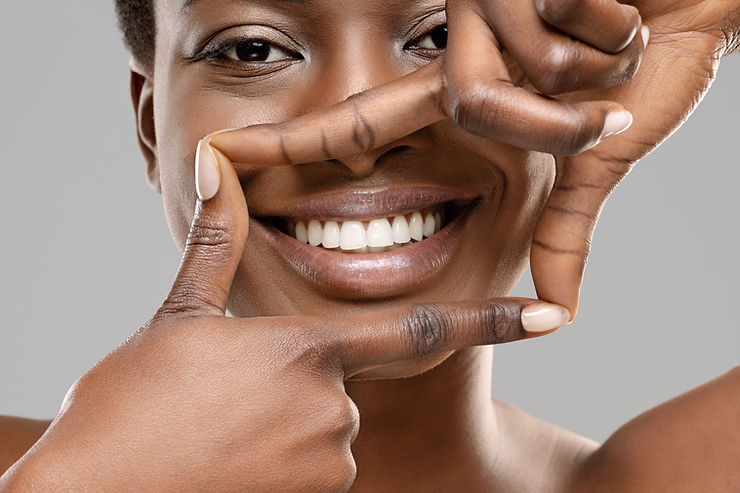
You can moisturize, exercise, and sleep eight hours a night — but if your smile is showing signs of age, it has a way of undermining everything else. Research in facial perception consistently shows that the condition of a person’s teeth is one of the strongest visual cues people use to estimate age. Worn, discolored, or receding teeth can add years to your appearance in ways that even the best skincare routine cannot counteract.
The good news is that most of the changes that age a smile are treatable. Modern cosmetic dentistry has a toolkit that can address enamel wear, deep staining, gum recession, and missing teeth — often with results that are more dramatic and longer lasting than people expect.
Here is what your smile may be telling people about your age, and exactly what can be done about it.
How teeth change as we age
Understanding what ages a smile is the first step toward reversing it. Several distinct changes accumulate over time, and most people are experiencing more than one simultaneously.
Enamel wear makes teeth look shorter and flatter
Enamel is the hard outer layer of your teeth, and it does not regenerate once it wears away. Decades of chewing, grinding, and acid exposure gradually reduce the length and definition of your teeth — particularly the front teeth. Young teeth have distinct edges and natural translucency. Older, worn teeth appear shorter, flatter, and more opaque.
This change in tooth length is one of the most significant age markers in a smile. Studies in cosmetic dentistry consistently identify tooth length as a primary visual cue that dental professionals and laypeople alike use to assess a patient’s age. Teeth that look short and worn read as old.
Discoloration deepens over time
Teeth naturally yellow and darken with age through two mechanisms. The outer enamel thins and becomes more translucent, allowing the naturally yellower dentin layer beneath to show through. At the same time, a lifetime of coffee, tea, wine, and food causes extrinsic staining that accumulates in the microscopic pores of the enamel surface.
The result is that even teeth with no decay or damage can appear noticeably darker and more yellow in a person’s 40s and 50s than they did in their 20s. That color shift alone has a measurable effect on perceived age and attractiveness in peer-reviewed perception studies.
Gum recession exposes more of the tooth structure
Healthy gum tissue frames the teeth in a way that looks full and youthful. As gum tissue recedes — due to age, gum disease, aggressive brushing, or grinding — more of the tooth root becomes visible. The teeth begin to look elongated and the gumline appears uneven. This is the origin of the phrase “long in the tooth” as a description of old age.
Gum recession also exposes the softer root surface of the tooth, which is more vulnerable to staining and sensitivity, compounding the visual and physical effects.
Missing or damaged teeth alter the entire facial structure
When a tooth is lost, the jawbone beneath it begins to resorb because it no longer receives the stimulation of bite force. Over time this bone loss changes the shape of the jaw and causes the face to take on a sunken appearance around the mouth. Even a single missing tooth can shift neighboring teeth out of alignment and begin this cascade.
The effect on perceived age is significant. Facial fullness is a hallmark of youth — and tooth loss actively works against it.
The treatments that reverse an aging smile
Each of the changes described above has a corresponding treatment. For most patients, the most dramatic results come from combining two or three of these approaches as part of a planned smile makeover.
Teeth whitening: the fastest, most accessible starting point
Professional teeth whitening addresses the extrinsic and, to a degree, intrinsic discoloration that accumulates over years of use. At Winyah Dental Group we use the KoR Whitening system, widely recognized as one of the most effective professional whitening treatments available. Unlike over-the-counter strips and trays, KoR is designed to address deep, set-in staining and produce results that are significantly more dramatic and longer lasting.
Whitening is typically the first step in any cosmetic treatment plan because it establishes the baseline shade that other restorations will be matched to. It is also the most conservative option — no reduction of tooth structure, no lab work, just a noticeably brighter smile in a short period of time.
Whitening works best on surface and age-related staining. For teeth that are heavily worn, structurally compromised, or have intrinsic discoloration that does not respond to bleaching, veneers or crowns are the more appropriate solution.
Dental veneers: restoring length, shape, and color in one treatment
Porcelain veneers are thin, custom-made shells bonded to the front surface of the teeth. They can simultaneously address discoloration, worn edges, minor chips, and small gaps — making them one of the most versatile cosmetic treatments available for patients whose teeth show multiple signs of aging.
Veneers can add back the length and definition that enamel wear has removed, restore the natural translucency that makes young teeth look luminous, and create a uniformity of shape and color that looks natural rather than artificial when done well.
The results are long lasting — porcelain veneers typically last 10 to 20 years with proper care — and they are highly resistant to future staining. For patients in their 40s and 50s looking for the most comprehensive cosmetic transformation, veneers are often the centerpiece of the treatment plan.
Dental implants: rebuilding the foundation of a youthful face
For patients with one or more missing teeth, dental implants are the gold standard replacement option — and from an anti-aging perspective, they are uniquely valuable because they are the only restoration that addresses the underlying bone loss.
An implant is a titanium post placed directly into the jawbone, where it fuses with the surrounding bone through a process called osseointegration. That fusion preserves the bone that would otherwise resorb after tooth loss, maintaining the facial structure and volume that gives a face its youthful shape. The crown placed on top of the implant looks and functions like a natural tooth.
Bridges and dentures replace the visible tooth but do not address the bone below it. For patients who want results that hold up over the long term and support their facial structure, implants are the more complete solution.
Crowns: restoring severely worn or damaged teeth
When teeth are too worn, cracked, or damaged to be addressed by whitening or veneers alone, dental crowns provide full coverage restoration. A crown covers the entire visible portion of the tooth, restoring its original shape, size, and color while protecting the underlying structure.
For patients who have significant enamel wear from grinding or acid erosion, crowns on the back teeth combined with veneers on the front teeth is a common approach to rebuilding the entire bite and restoring the vertical dimension of the smile — one of the key measurements that determines how youthful a face looks in profile.
Treating gum recession: reframing the smile
Gum recession is addressed through a combination of treating its cause and, where significant recession has occurred, soft tissue procedures to restore a healthier gumline. For patients whose recession stems from gum disease, getting that infection under control through professional cleanings and periodontal care is the essential first step.
Equally important is addressing any habits that accelerate recession. Brushing too hard with a hard-bristled brush and untreated teeth grinding are two of the most common causes of premature gum recession. The team at Winyah Dental Group can assess your gum health and recommend the right course of action based on how much recession has occurred and what is driving it.
What a smile makeover actually looks like
Most patients seeking cosmetic treatment are not starting from scratch. They have healthy teeth overall, but a combination of the changes above has accumulated over the years in a way that is starting to bother them. A smile makeover is not a single procedure — it is a coordinated treatment plan that sequences the right procedures in the right order to achieve a natural, cohesive result.
A typical sequence for an age-reversal smile makeover might look like this: any underlying health issues (decay, gum disease, damaged restorations) are addressed first through operative dentistry. Then whitening establishes the target shade. Then veneers or crowns restore shape, length, and final color. If implants are needed, they are placed and allowed to integrate before the final restorations are completed.
The result, when planned well, looks like a naturally great smile — not like obvious dental work. The goal is not to look like you had cosmetic dentistry. The goal is to look like a healthier, younger version of yourself.
How much younger can cosmetic dentistry make you look?
This is the question almost everyone wants to ask but feels self-conscious about. The honest answer is: it depends on your starting point, but the effect is often more significant than people expect.
Perception research has found that smile improvements can shift estimated age by five to ten years in some cases. More practically: patients who complete a smile makeover consistently report that others tell them they look well-rested, healthy, or “different somehow” without being able to identify exactly why. A bright, full, well-shaped smile reads as vitality — and vitality reads as youth.
The changes also tend to have a secondary effect on confidence. Patients who have been avoiding smiling openly for years because they are self-conscious about their teeth often describe a shift in how they carry themselves after treatment. That kind of presence has its own anti-aging effect.
Frequently asked questions
What is the most effective cosmetic dental treatment for aging teeth?
The most effective treatment depends on which signs of aging are most prominent. For discoloration alone, professional teeth whitening delivers dramatic results quickly. For worn, short, or misshapen teeth, porcelain veneers restore length, shape, and color simultaneously. For missing teeth, dental implants are the most comprehensive solution because they replace the tooth and preserve the underlying jawbone. Most patients with multiple concerns benefit from a combined treatment plan.
At what age do teeth typically start to show signs of aging?
Most patients begin to notice visible changes in their 30s and 40s. Enamel wear accumulates gradually throughout adulthood, while discoloration and minor gum recession become more apparent in the 40s and 50s. However, habits like teeth grinding, smoking, heavy coffee or tea consumption, and inadequate dental hygiene can accelerate these changes significantly at any age.
Can you reverse gum recession naturally?
Gum tissue that has already receded does not regenerate on its own. Progression can be slowed or stopped by treating underlying gum disease, switching to a soft-bristled toothbrush, using proper brushing technique, and addressing teeth grinding. For significant recession, a soft tissue graft procedure can restore gum coverage. The most important step is getting an evaluation so the cause of the recession can be identified and addressed.
How long do cosmetic dental treatments last?
Longevity varies by treatment. Professional teeth whitening results typically last one to three years with touch-ups. Porcelain veneers last 10 to 20 years on average with proper care. Dental implants are designed to be permanent and can last a lifetime when properly maintained. Crowns typically last 10 to 15 years. Regular professional cleanings and good home hygiene extend the life of all cosmetic restorations significantly.
Does teeth whitening work on veneers or crowns?
No. Whitening agents work on natural tooth enamel only. Porcelain veneers, crowns, and composite restorations do not respond to bleaching. This is why whitening is always performed before veneers or crowns are placed — so the new restorations can be matched to the whitened shade of the natural teeth.
Is cosmetic dentistry covered by insurance?
Most purely cosmetic procedures such as whitening and veneers are not covered by dental insurance. However, treatments that serve both functional and cosmetic purposes — such as crowns on damaged teeth or dental implants to replace missing teeth — may have partial coverage depending on the plan. Winyah Dental Group’s team can review your coverage and discuss financing options during your consultation.
Your smile is one of the first things people notice — and one of the most powerful signals of health and vitality. Whether you are bothered by discoloration, worn edges, or a smile that has simply changed over the years, the team at Winyah Dental Group can walk you through exactly what is possible and what a realistic treatment plan looks like for your specific situation.
We see patients at two convenient locations in Georgetown and Pawleys Island, SC.
Book a cosmetic consultation — Pawleys Island | Book a cosmetic consultation — Georgetown